4.2 KiB
Transport Service Guide
The transport service provides paid point-to-point travel for players and nearby vehicles or passengers. It is framework-owned: missions only need placed transport objects and arrival markers with the expected variable names.
Mission Contract
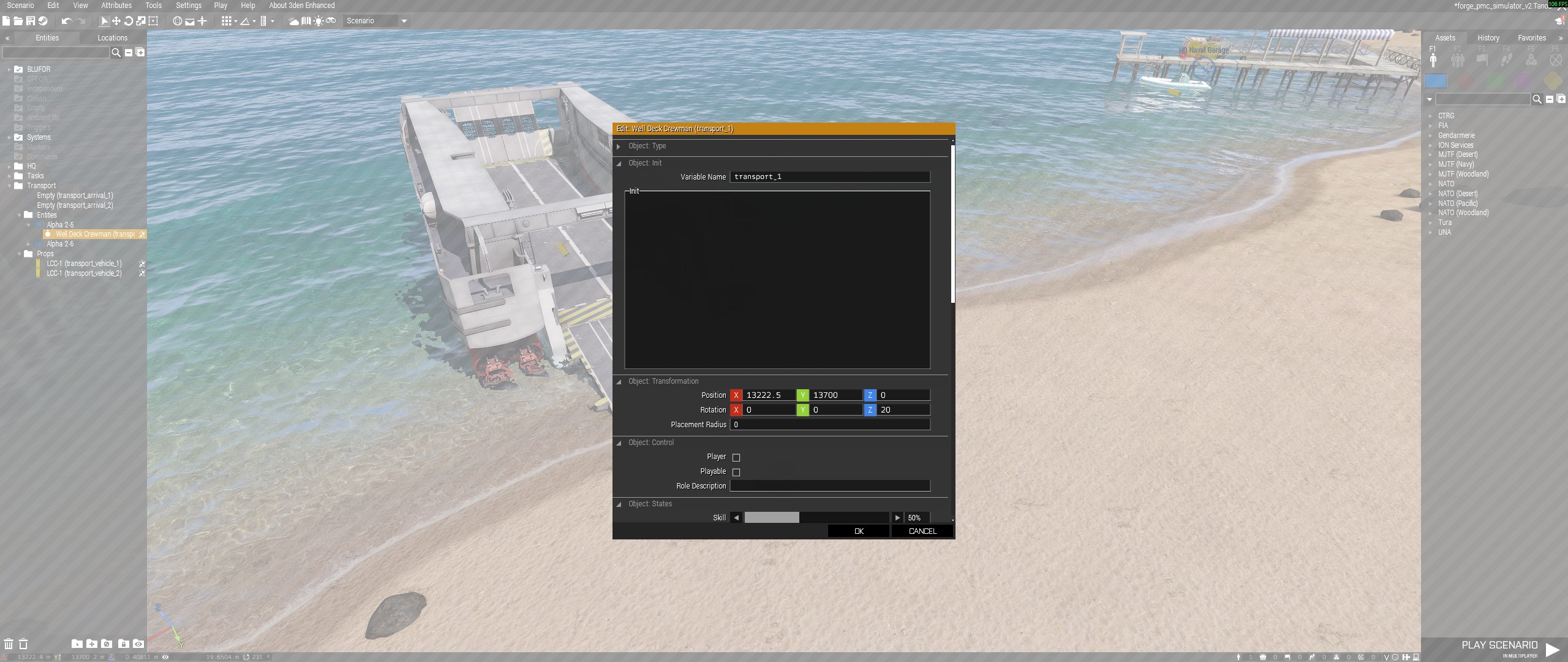
By default the framework discovers transport nodes by exact mission namespace variable name:
transport
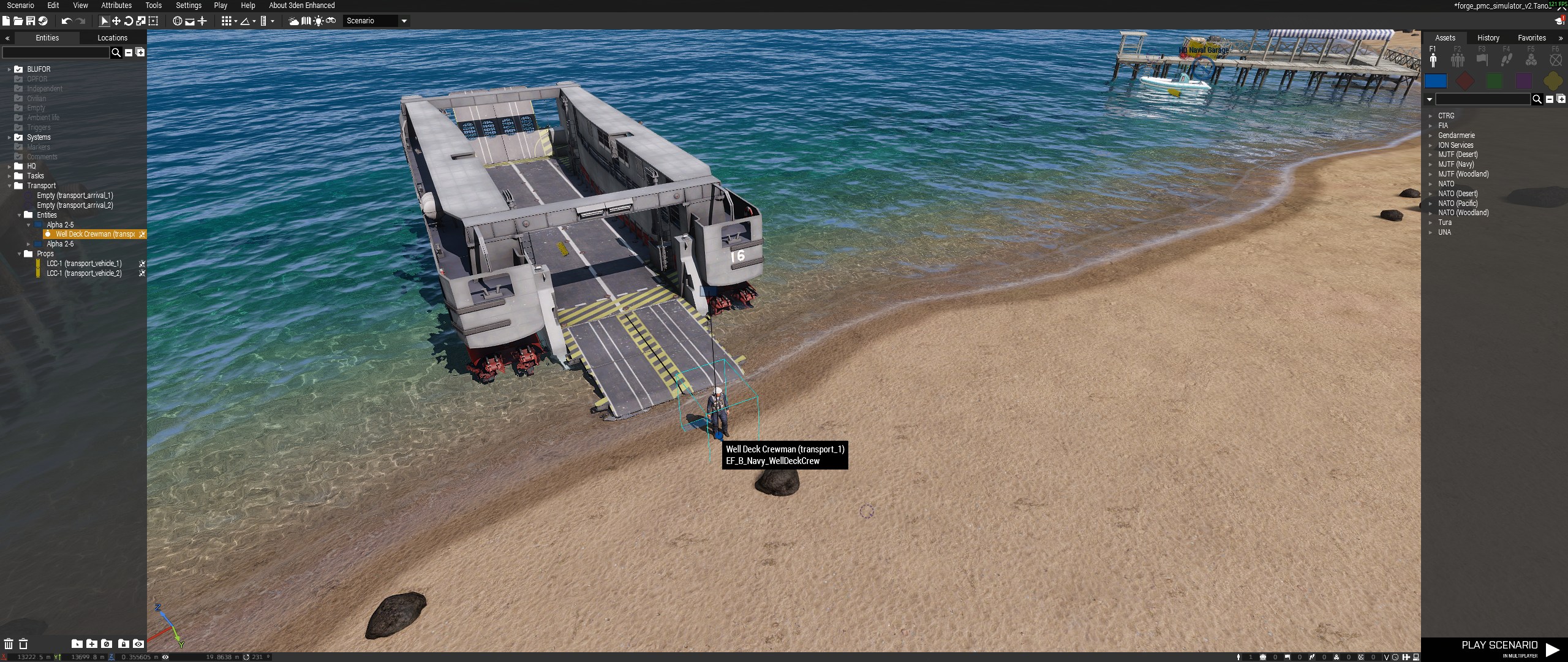
transport_1
transport_2
...
transport_10
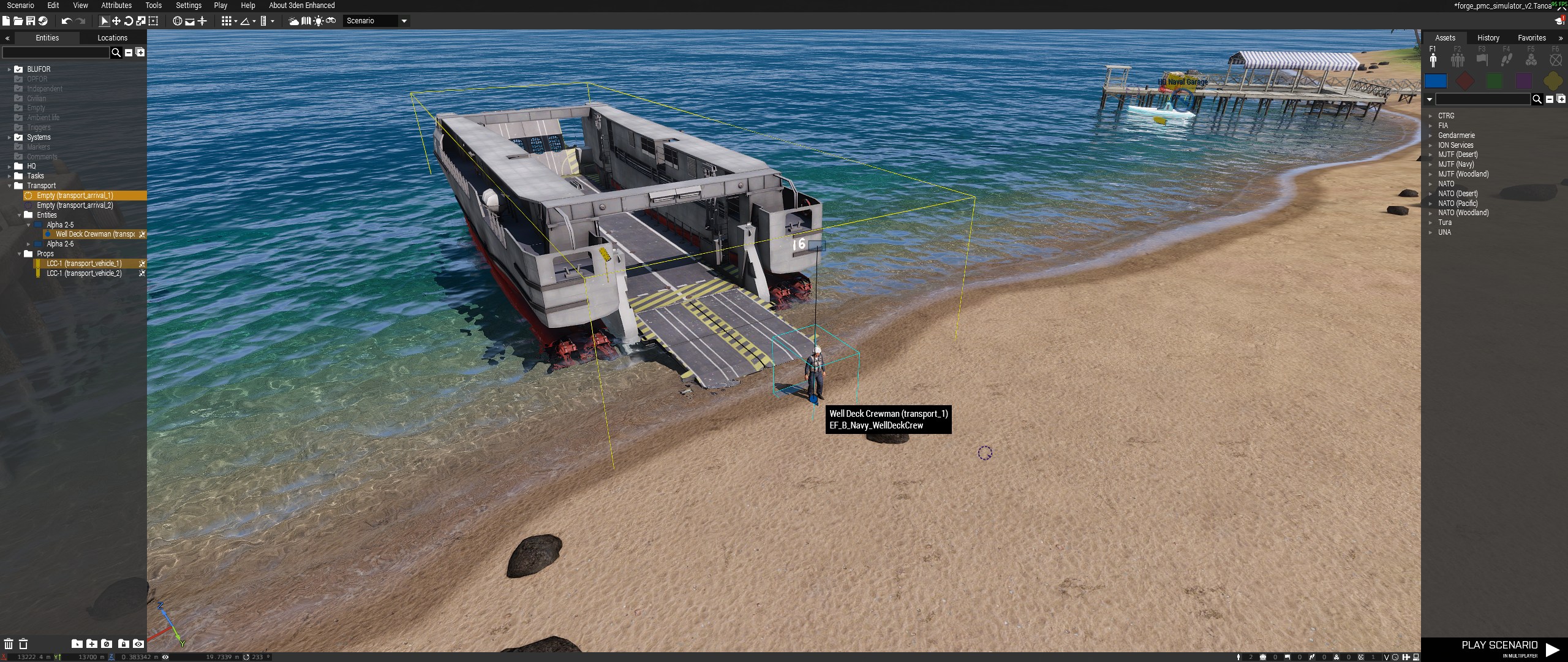
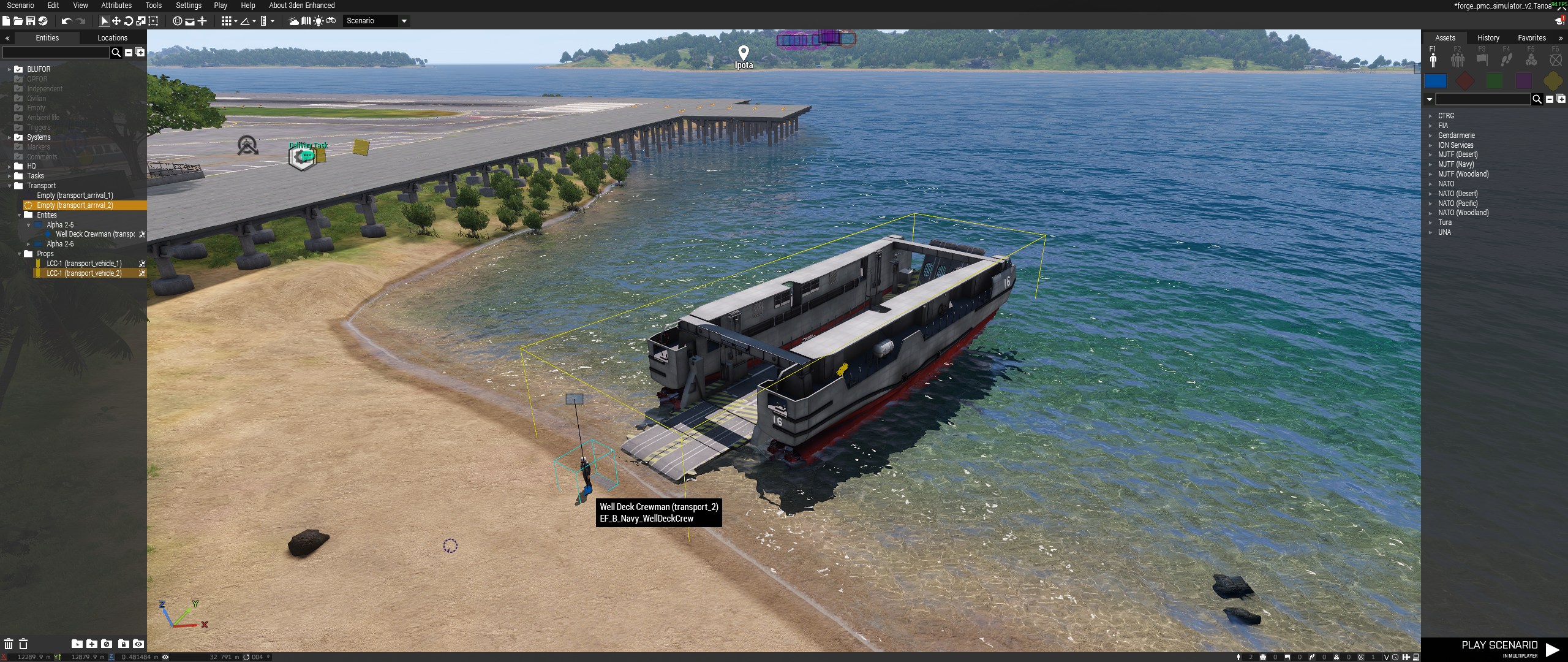
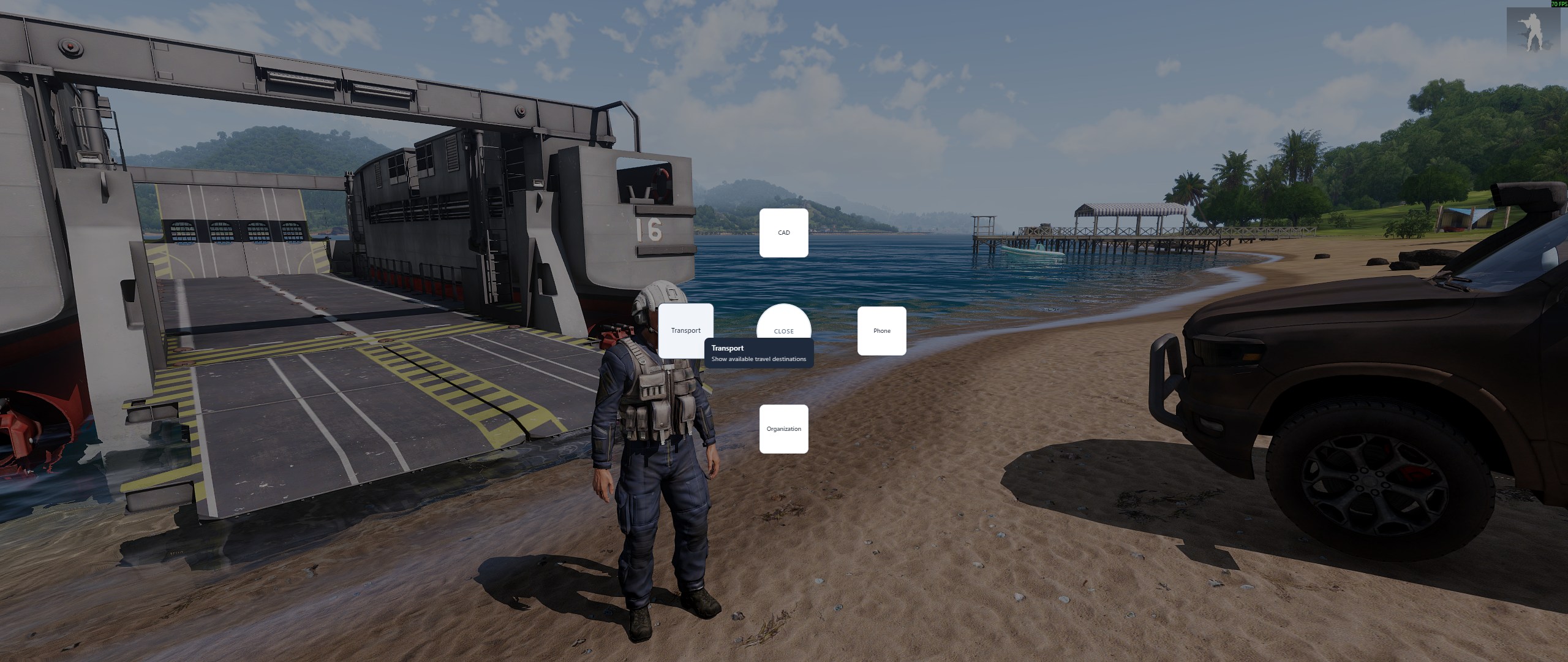
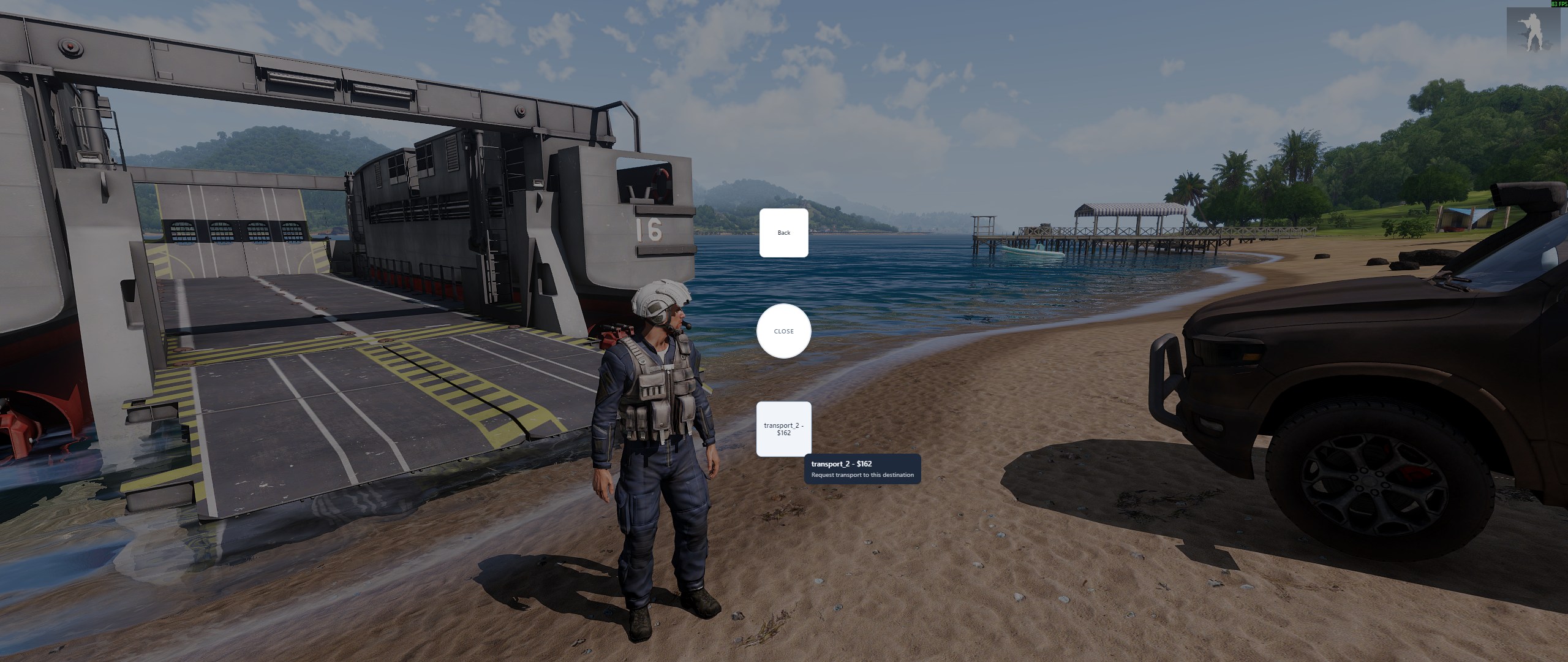
Each node is an Eden-placed object players can stand near. When a player opens the actor interaction menu within 5 meters of a node, the menu shows a Transport action. Selecting Transport opens destination choices for the other configured nodes.
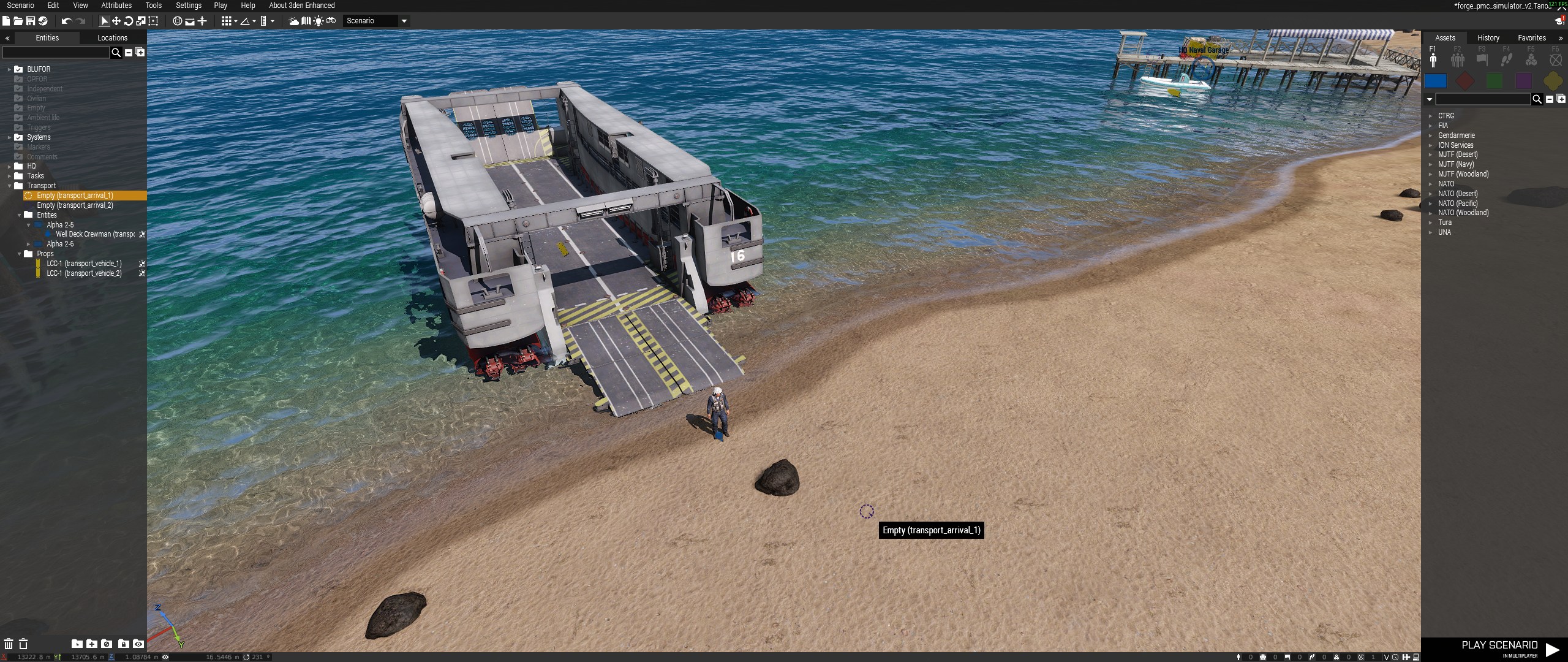
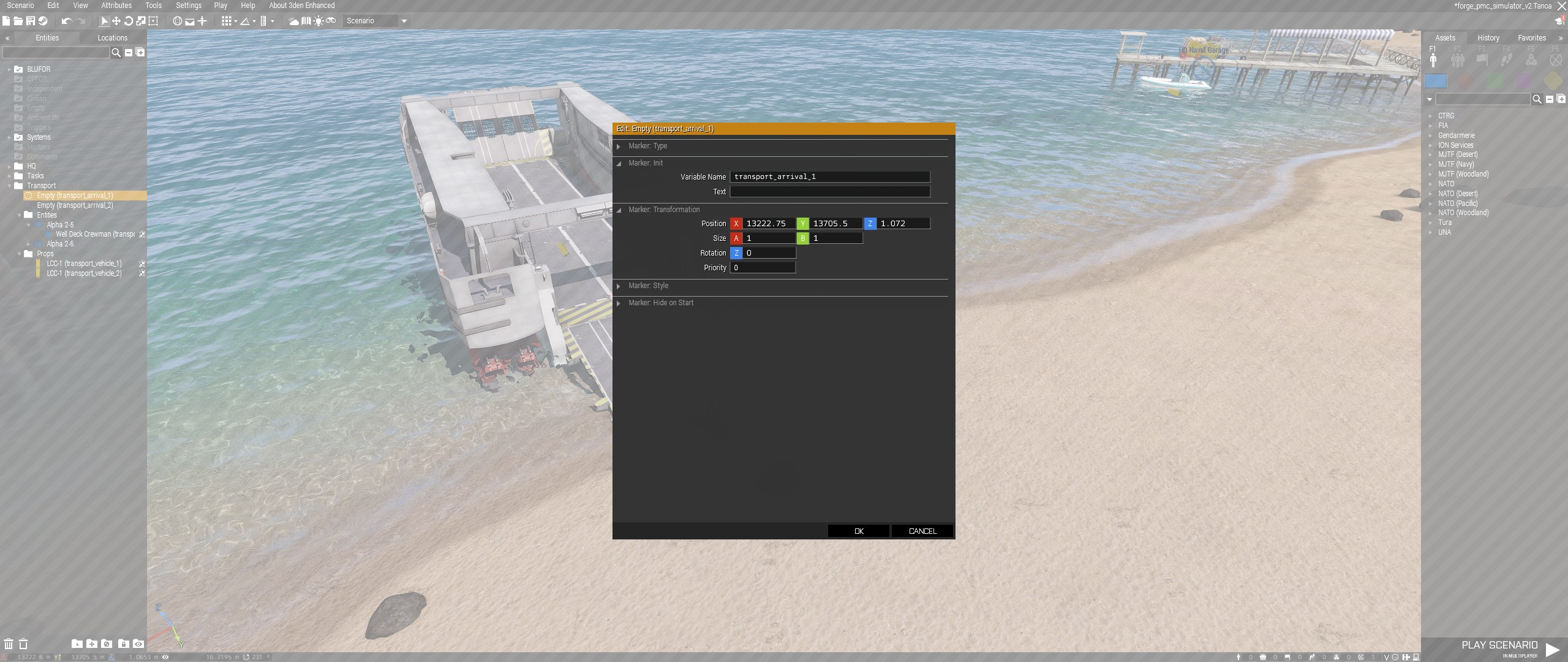
Arrival markers use the same suffix:
transport_arrival
transport_arrival_1
transport_arrival_2
...
transport_arrival_10
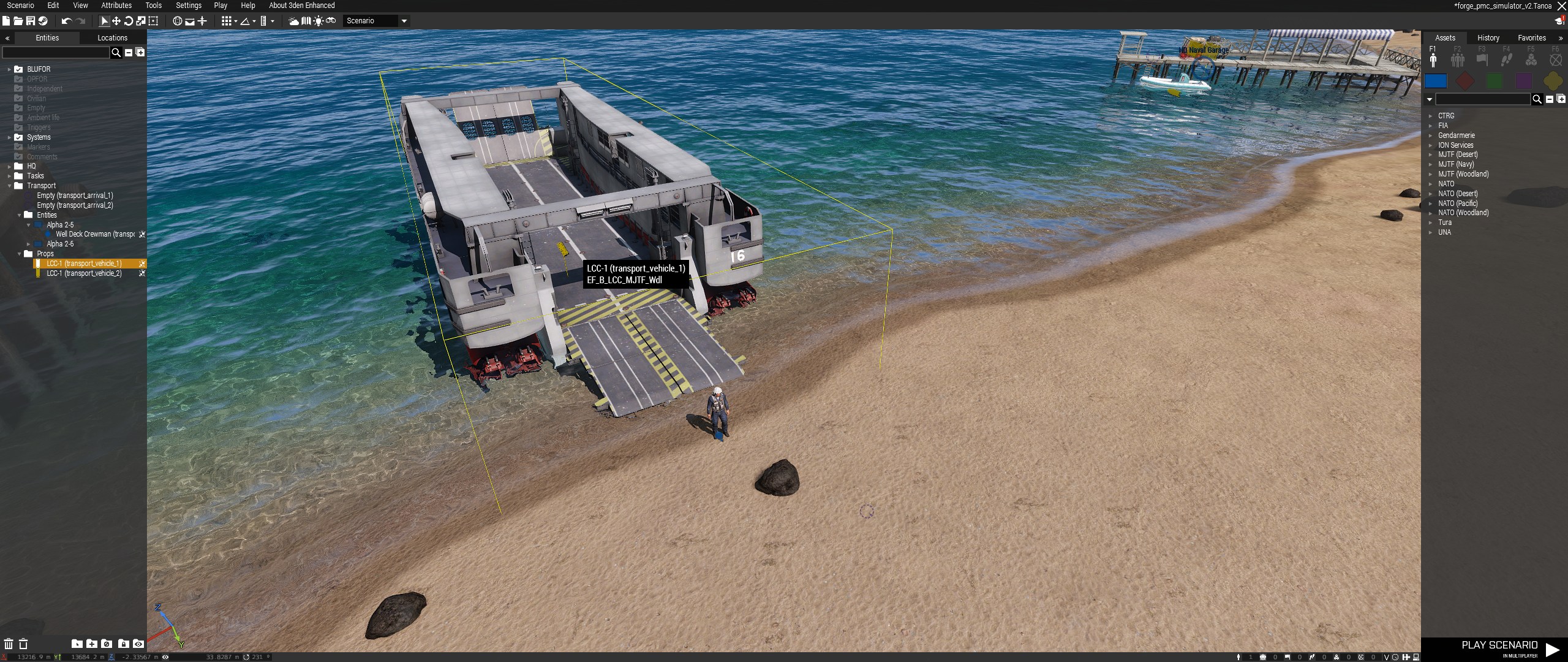
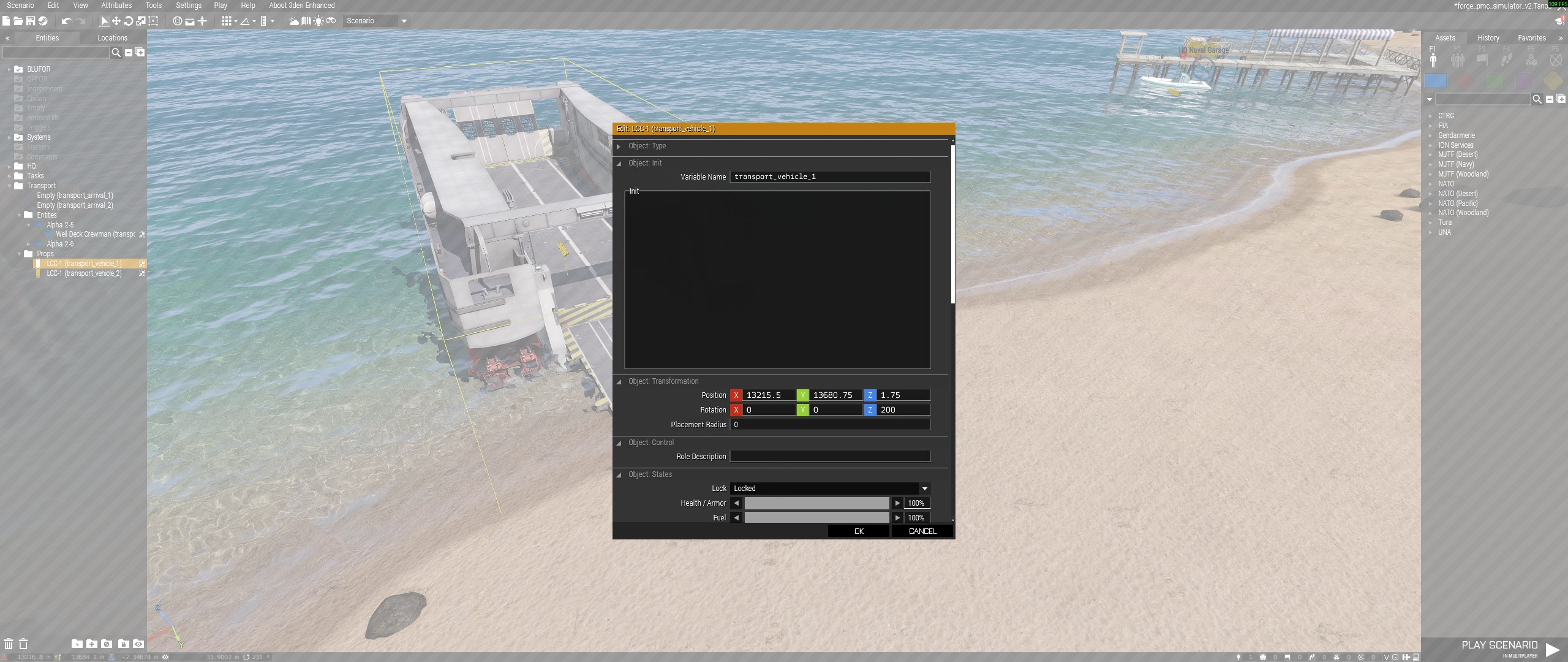
Object names used only to exclude parked ferry/transport vehicles from cargo pickup scans use this convention:
transport_vehicle
transport_vehicle_1
transport_vehicle_2
...
transport_vehicle_10
The suffix mapping is direct:
transportarrives attransport_arrivaltransport_1arrives attransport_arrival_1transport_10arrives attransport_arrival_10
If an arrival marker is missing, the framework falls back to a position behind the destination node object.
Pricing and Payment
The default fare is:
base fare + distance in kilometers * price per kilometer
Current defaults:
- base fare:
$100 - price per kilometer:
$50 - cargo scan radius:
25meters - max indexed nodes:
10
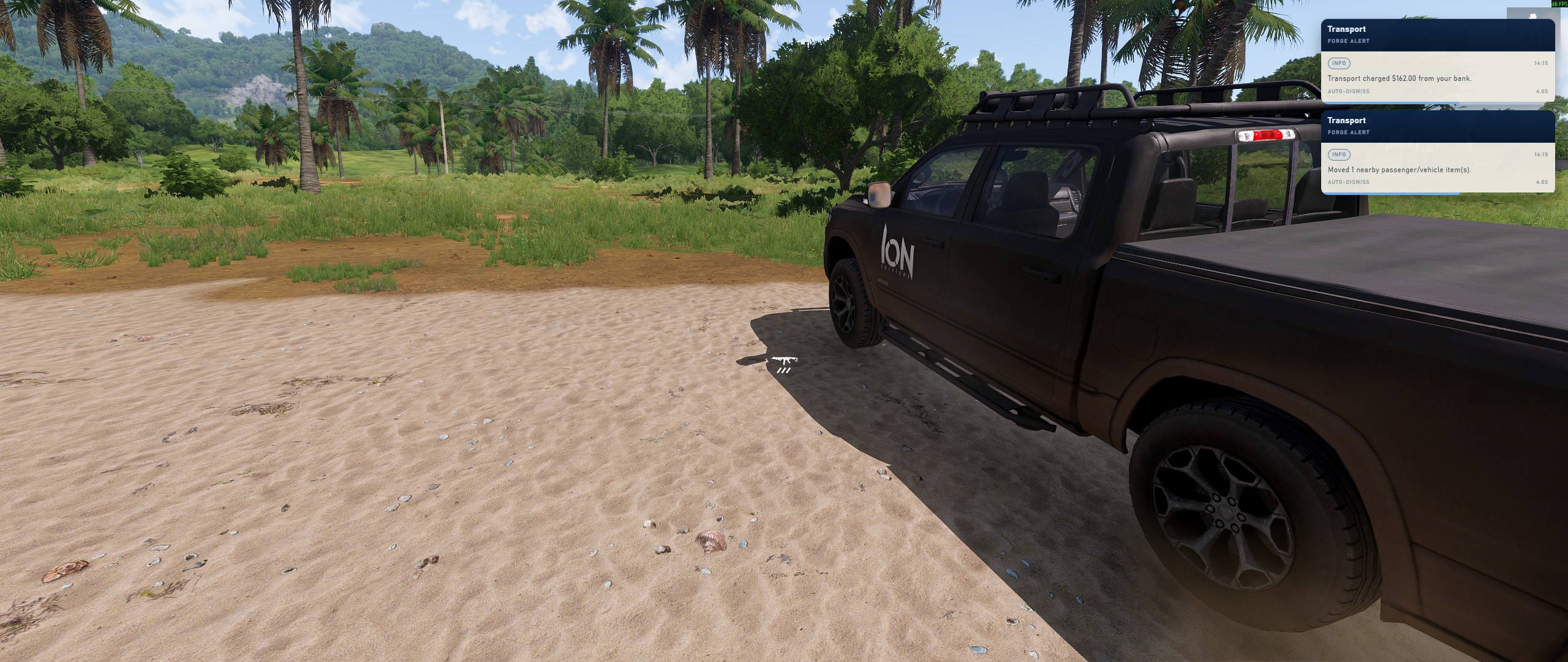
Payment is server-authoritative. The transport service attempts payment in this order:
- Player bank balance.
- Player cash.
- Organization credit line fallback.
The player and cargo are moved only after payment succeeds.
Cargo and Vehicle Transfer
When a player requests transport, the server scans near the origin node for nearby vehicles, ships, aircraft, and player units. The scan ignores:
- the origin and destination transport nodes
- objects named with the
transport_vehicleprefix - the requesting player
- dead entities
Use transport_vehicle* names for the actual boat, ferry, aircraft, or set
dressing object that should not be moved as cargo.
Pricing
Default transport pricing comes from the mission setup UI or matching mission
Params entries named transportBaseFare and transportPricePerKm. If neither
is set, CfgMissions >> ServicePricing provides the fallback.
Optional Per-Node Overrides
The default naming convention should cover normal missions. If a specific mission needs another prefix or different pricing, set variables on the transport node object:
this setVariable ["isTransport", true, true];
this setVariable ["transportLabel", "North Dock", true];
this setVariable ["transportNodePrefix", "dock", true];
this setVariable ["transportVehiclePrefix", "dock_vehicle", true];
this setVariable ["transportArrivalPrefix", "dock_arrival", true];
this setVariable ["transportMaxIndexedNodes", 4, true];
this setVariable ["transportBaseFare", 150, true];
this setVariable ["transportPricePerKm", 75, true];
this setVariable ["transportCargoRadius", 25, true];
this setVariable ["transportIncludeCargo", true, true];
Only use overrides when the default transport* convention or mission-level
pricing is not appropriate.
Reference Images
These screenshots show the default transport setup and player workflow: